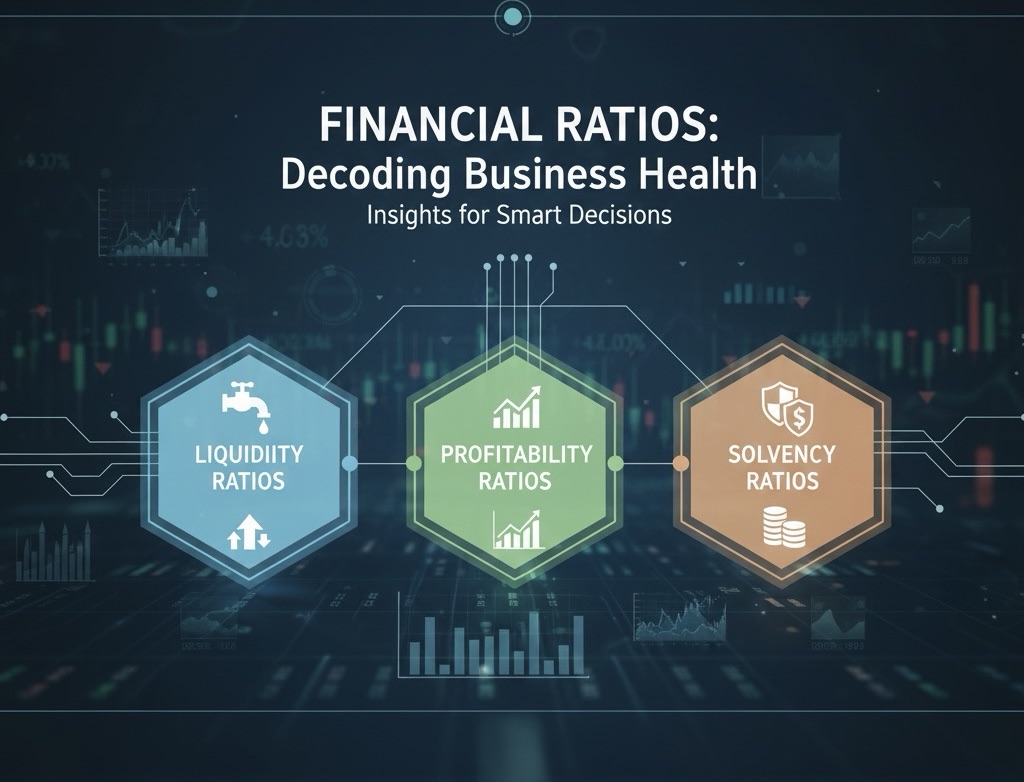
Learn the most important financial ratios every entrepreneur and beginner investor should know. This friendly, easy-to-understand guide explains what the ratios mean, why they matter, and how they can help you make smarter business and investment decisions.
Why Understanding Financial Ratios Is a Game-Changer
If numbers and accounting feel intimidating, you’re not alone. Many entrepreneurs and new investors avoid financial statements because they look technical — but once you understand financial ratios, everything becomes clearer.
Financial ratios help you:
- Quickly assess whether a business is healthy
- Spot financial risks before they become disasters
- Make confident investment decisions
- Manage your own business like a CEO
- Understand profitability, debt levels, cash flow, and valuation
- Avoid guesswork and rely on smart, evidence-based insights
In short: financial ratios turn confusing financial statements into simple indicators of business performance.
1️⃣ Liquidity Ratios: Can the Business Pay Its Bills?
Liquidity ratios measure how easily a business can meet short-term obligations. For entrepreneurs and investors, this is crucial because even profitable companies can fail if they run out of cash.
Current Ratio
Shows whether the company can pay short-term debts with current assets.
Quick Ratio (Acid Test Ratio)
Stricter liquidity measure that excludes inventory.
Cash Ratio
Assesses the ability to pay obligations using only cash.
Why this matters:
Strong liquidity means stability. Weak liquidity is a red flag for cash flow issues.
2️⃣ Solvency Ratios: Is the Company Over-Leveraged?
Solvency ratios measure long-term financial stability and debt levels.
Debt-to-Equity Ratio
Shows how heavily a business relies on debt vs. owner capital.
Debt Ratio
Proportion of assets financed by liabilities.
Interest Coverage Ratio
Reveals if a business can comfortably pay its interest expense.
Why this matters:
Too much debt increases financial risk. These ratios help you avoid over-leveraged companies.
3️⃣ Profitability Ratios: Is the Business Actually Making Money?
Profitability ratios show how well a business generates income relative to sales, assets, and equity.
Net Profit Margin (NPM)
Profit earned from each unit of sales.
Gross Profit Margin (GPM)
Efficiency of core production or procurement.
Operating Profit Margin
Shows strength in core operations.
Return on Assets (ROA)
Measures profit efficiency relative to assets used.
Return on Equity (ROE)
Shows how well the company rewards shareholders.
Why this matters:
High revenue doesn’t always mean high profit. These ratios reveal the truth.
4️⃣ Efficiency Ratios: How Well Does the Business Use Its Resources?
Efficiency ratios show whether a business is using its assets and working capital effectively.
Inventory Turnover
How quickly inventory is sold.
Receivables Turnover
How fast customers pay.
Payables Turnover
How fast the business pays suppliers.
Asset Turnover
Measures how effectively assets generate revenue.
Why this matters:
Inefficient businesses lose money through delays, waste, and poor cash flow.
5️⃣ Market Value Ratios: What Is the Business Worth to Investors?
These ratios help investors assess market value and future growth potential.
Earnings Per Share (EPS)
Profit earned per share.
Price-to-Earnings (P/E) Ratio
Shows whether a stock is cheap or expensive.
Dividend Yield
Return earned through dividends.
Dividend Payout Ratio
Portion of earnings distributed to shareholders.
Why this matters:
Market value ratios help you avoid overpriced companies and identify undervalued opportunities.
🌟 Final Thoughts: Financial Ratios Are the Entrepreneur’s Secret Weapon
You don’t need to be an accountant to understand financial ratios — you just need the right explanations.
When you learn these ratios, you gain the confidence to:
- Grow your business wisely
- Evaluate opportunities with clarity
- Avoid risky ventures
- Understand the true story behind financial statements
Mastering financial ratios is one of the simplest ways to level up your business and investment journey.
Thank you for passing by.
By Jill Boafo.
Please Like, Comment and Subscribe to my posts for more.


Leave a Reply